Heavy Duty Towing
How Macarthur Moves a Box Truck, a Bus, or a Loaded Tractor Trailer
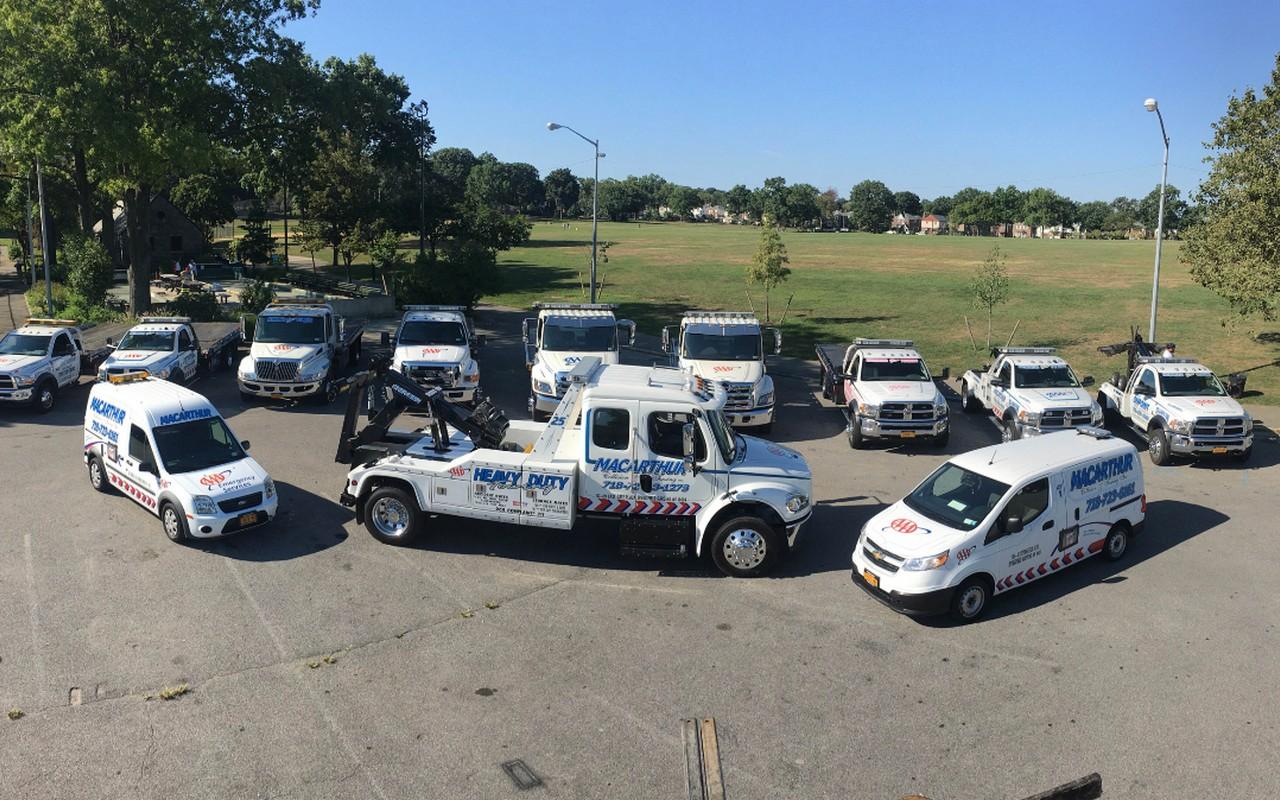
Heavy duty towing is a different trade from towing cars. The wrecker weighs as much as the truck it is towing, the driver has to release air brakes and protect a driveline before anything moves, and a loaded trailer has to arrive with its load where it started. Macarthur runs its own heavy wreckers from Valley Stream, with drivers who do this every week. Call 516-362-5350 with the vehicle, the weight, and the load.
Reviews and credentials
What Drivers and Fleet Managers Say About Macarthur on Google
The Google reviews below are from drivers Macarthur has towed, and the pattern in them is the one a fleet manager cares about: the driver who came knew the job, handled the vehicle carefully, and did not make a bad day worse. The heavy wrecker drivers are held to the same standard, with bigger equipment.
I got locked out my car on a cold snowy night and Alex came and unlock my car. He was very quick and professional. I would definitely use this towing company again.
Great timing and professionalism. The tow truck driver Carlos was experienced and helpful. I would recommend this company and Carlos to anyone.
Not the usual experience with a towing company. Everyone that I spoke to was polite and respectful and they towed my car with care. Hopefully I never need my car towed again, but if I do, this is who I will be using!
- 1,800+Google reviews, 5.0 average as of Oct 2026
- 24/7Our own trucks, our own drivers
- 16Certifications on the shop wall
- I-CARGold Class training recognition
- 1 ShopTow fleet and body shop, Valley Stream
- LicensedDMV # 7110205 · DCA # 1389419
Every review here came from a towing or roadside call. If a Macarthur wrecker has moved your truck, a few words on Google tell the next fleet manager with a down unit who to call.
The same company, the same standard, a heavier truck.
- Heavy Duty Towing
- Heavy Wrecker
- Truck Towing
- Box Truck Towing
- Bus Towing
- Tractor Trailer Towing
- Semi Towing
- Dump Truck Towing
- Commercial Towing
- Fleet Towing
- Heavy Recovery
- 24 Hour Towing
What Heavy Duty Towing Means, and Which Vehicles Need a Heavy Wrecker
Heavy duty towing covers vehicles too heavy or too long for a light wrecker: straight trucks and box trucks, school and coach buses, dump trucks, garbage trucks, cement mixers, tractors with or without trailers, and loaded trailers. The heavy wrecker has the boom, the underlift, and the weight to lift one end of a loaded truck without its own rear wheels coming off the road.
The dividing line is weight and brakes. A one-ton pickup with a utility body is still light duty. A cutaway van with a box is medium. Anything with air brakes, a tandem axle, or a gross weight in the tens of thousands of pounds is heavy, and towing it with a truck that is too small is dangerous for the driver, the vehicle, and everyone on the road behind it.
A heavy wrecker is built around three things. The underlift, a hydraulic arm that slides under the towed vehicle's axle or frame and lifts it, rated for the weight of a loaded truck. The boom and winches, for recovery work when a truck has gone off the pavement or onto its side. And the wrecker's own weight and wheelbase, which keep it planted when the back of a loaded truck is hanging off its underlift. Macarthur's heavy wreckers are run by drivers who tow commercial vehicles every week and know how to set up each type.
This page covers what to tell us about the vehicle, how a heavy tow is set up step by step, how recovery works when a truck is off the road, where commercial vehicles go, what affects a heavy quote, how fleet accounts run, and the towns the heavy wreckers cover. For the rest of the fleet, start at the towing page.
Air brakes, tandem axle, or a loaded trailer? That is the heavy wrecker.
What the Office Needs to Know Before a Heavy Wrecker Leaves the Yard
The type of vehicle, the gross weight or at least whether it is loaded, what the load is, whether it has air brakes, whether it is a tractor with a trailer attached, how it is sitting, and where it is going. From that the office sends the right wrecker with the right driver and the right gear, and quotes the job before the truck rolls.
A heavy tow that is set up wrong on the phone costs an hour at the scene. Here is what the office asks and why each answer matters.
The vehicle. Box truck, bus, dump truck, tractor, tractor and trailer. Each is set up differently. A bus has an overhang the underlift must clear; a dump truck has a frame that lifts from a different point than a box truck; a tractor trailer may need the trailer dropped or towed as a unit.
Weight and load. Loaded or empty, and what the load is. Weight decides which wrecker. The load decides how the vehicle is secured and whether it can be towed as is, or whether something has to be shifted or offloaded first. Refrigerated, hazardous, or liquid loads each need a word.
Brakes. Air brakes lock when the air is gone. The driver brings the fittings to supply air from the wrecker or to cage the brakes so the wheels turn. Tell us if the vehicle has air brakes and whether it has lost pressure.
Driveline. Towing a truck with its rear wheels on the road turns the driveshaft and the transmission without lubrication. The driver pulls the driveshaft or the axle shafts before the tow. It takes a few minutes and saves the transmission.
How it is sitting. On the pavement, on a shoulder, off the road, on its side, jackknifed. That decides whether this is a tow or a recovery first, and which winches and rigging come along.
Destination. Your yard, a dealer, a repair facility, a terminal. The driver needs the address and whether anyone will meet the truck.
Vehicle, weight, load, brakes, how it is sitting, and where it goes. Six answers, one wrecker.
How a Heavy Tow Is Set Up, Step by Step, From Arrival to the First Mile
The driver walks the vehicle, secures the scene, supplies air or cages the brakes, pulls the driveshaft or axle shafts, positions the wrecker, slides the underlift under the axle or frame, lifts and secures the vehicle, connects lights, and checks everything before moving. On a tractor trailer he also decides whether the trailer rides with the tractor or is moved separately.
A heavy tow has more steps than a car tow, and every one of them is there for a reason.
Walk-around and scene
The driver checks the vehicle's condition, leaks, and how it is sitting, and positions the wrecker to shield the work from traffic with its lights on. Any load that has shifted is noted before the vehicle moves.
Brakes
If the air system is intact, the wrecker supplies air through a line so the brakes release and can be applied from the wrecker during the tow. If the system is damaged, the spring brakes are caged by hand so the wheels can turn, and the vehicle is towed with the wrecker's brakes doing the work.
Driveline
The driveshaft is unbolted at the differential and secured, or the axle shafts are pulled and the hubs capped, so the transmission does not turn during the tow. The parts ride with the vehicle and go back in at the destination.
Underlift and securing
The underlift slides under the front axle or a frame crossmember, with the correct attachments for that truck, and lifts the front end. Safety chains go to the frame. On a bus, the lift point is chosen to clear the overhang. On a dump truck, the body is secured so it cannot lift.
Trailers
A loaded trailer can often be towed as a unit behind the tractor on the underlift. If the tractor is too damaged, the trailer is uncoupled and moved with the wrecker's fifth wheel or with a second truck. The decision is made on scene from the condition of the tractor and the load.
Lights, checks, and the first mile
Tow lights are connected, the lift is checked, the chains are checked, and the driver pulls away slowly and stops after the first stretch to check again. Then it is a normal drive to the destination.
Brakes, driveline, underlift, chains, lights, check. The driver does it the same way every time.
Heavy Recovery: Getting a Truck Back on the Pavement Before It Can Be Towed
A truck that has gone off the road, into soft ground, onto its side, or jackknifed is recovered before it is towed. The driver assesses how it is sitting, picks anchor and attachment points that will not tear the frame or the body, rigs the wrecker's winches, and brings the vehicle back to firm ground in controlled stages. Then the tow is set up as usual.
Recovery is the part of heavy work that separates experience from equipment. The wrecker has the winch capacity; the driver has to know where to pull from and how fast.
Off the shoulder or in soft ground. The wrecker is positioned for a straight pull where possible, with its own stabilizers down. The winch line goes to a frame point rated for the pull, and the vehicle comes back in stages while the driver watches the ground and the frame. Boards or mats go under the wheels if the ground is soft.
On its side. An uprighting is rigged so the truck comes over slowly and settles on its wheels rather than slamming down. The load, the fuel, and the cab are considered before anything moves. Some uprightings need a second wrecker, and the office arranges that from what you describe.
Jackknifed. The tractor and trailer are straightened in stages, with the trailer secured so it does not swing, before the unit is towed or separated.
After recovery. The driver checks underneath for leaks and damage the recovery may have revealed, documents the condition, and then sets up the tow. Recovery work is quoted as part of the job; the towing cost section explains how. For passenger cars, the accident recovery page covers the same process at a smaller scale.
Off the road or on its side? Say so and the rigging comes with the wrecker.
Where Commercial Vehicles Go: Your Yard, a Dealer, a Repair Facility, or a Terminal
Heavy tows go wherever you direct: your own yard, a truck dealer's service department, an independent heavy repair facility, a body builder, or a terminal. Give the office the address, the hours, and who will receive the vehicle. If the destination is closed, the vehicle can be held at our yard in Valley Stream until they open.
Commercial destinations usually have rules: a gate, a receiving window, a yard supervisor who signs for the unit. Tell the office what they are so the driver is not sitting at a closed gate with a loaded trailer. If the vehicle is going to a repair facility, say whether they want it in a specific bay or lane. If it is going to your own yard, say where it should be parked and whether it needs to be backed in.
For a vehicle with body damage, Macarthur's own body shop repairs commercial vans and light trucks; the commercial body work section describes what the shop handles. Larger trucks go to the facility you choose. The destinations section on the towing page covers the general options, including collecting a vehicle from another yard once it is released.
Address, hours, and who signs. That gets the truck through the gate.
What Affects a Heavy Duty Quote, and Why the Setup Is Part of the Price
A heavy tow is priced on the distance, the vehicle and its weight, the setup work at the scene such as supplying air and pulling the driveshaft, any recovery before the tow, whether a second truck is needed, and the time of day. Macarthur quotes it on the phone from what you describe, and tells you the new number on scene before touching the vehicle if the job turns out to be different.
Heavy quotes have more inputs than car quotes because the job has more steps. Distance and weight set the base. Setup time is real work: caging brakes, pulling a driveshaft, dropping a trailer. Recovery adds winching and rigging, and an uprighting or a jackknife may need a second wrecker. A loaded trailer that has to be offloaded or transferred before the tow is its own line. Night, weekend, and holiday calls are priced as such.
What keeps the quote honest is an accurate description. Tell the office the vehicle, the weight, the load, the brakes, and how it is sitting, and the number reflects the real job. If the driver arrives to something different, a truck described as on the shoulder that is actually in the mud to the axles, he quotes the difference before anything is rigged, and you decide. The cost section on the towing page covers the general factors.
An accurate description on the phone is an accurate number on the invoice.
Fleet Accounts: One Number, a Known Yard, and a Driver Who Already Knows Your Trucks
Fleet operators, truck dealers, bus companies, and contractors keep standing accounts with Macarthur so a call is one sentence long. The office already knows your yard, your repair facility, your receiving hours, and who signs. Heavy wreckers handle the trucks, flatbeds handle the cars and equipment, and the same company tows all of it.
A fleet account is not a contract with minimums; it is the office knowing your operation. Where your trucks live, where they get fixed, which drivers are authorized to call, and how you want the invoice. From then on a down unit is a phone call with the unit number and the location, and the right wrecker leaves.
Dealers use the account to move inventory and collect trade-ins. Bus companies use it for route breakdowns. Contractors use it for both the trucks and the equipment on the flatbed. Repair facilities use it to bring in customer trucks that cannot be driven. Setting it up is one call to 516-362-5350; ask for fleet service. The commercial section on the towing page and the commercial section on the homepage describe how accounts run.
Run trucks? One call sets up the account, and the next call is one sentence.
Heavy Duty Towing Across Nassau County and the Queens Line, From the Yard in Valley Stream
Macarthur's heavy wreckers leave from 170 East Lincoln Avenue in Valley Stream and cover every town in Nassau County, the Queens neighborhoods along the county line, and the Suffolk towns just across it, 24 hours a day. Every town has its own heavy duty towing page.
The yard is on the Nassau–Queens line, close to the commercial corridors of the south shore and southeastern Queens: Valley Stream, Lynbrook, Elmont, Franklin Square, Hempstead, Rockville Centre, Oceanside, Baldwin, Freeport, Long Beach, Inwood, Lawrence, and in Queens, Laurelton, Rosedale, Springfield Gardens, St. Albans, Jamaica, and Far Rockaway.
The same wreckers cover the central and eastern Nassau industrial areas, Garden City, Mineola, New Hyde Park, Westbury, Carle Place, Uniondale, East Meadow, Levittown, Hicksville, Plainview, Bethpage, Farmingdale, Wantagh, Seaford, and Massapequa, the north shore from Great Neck and Port Washington to Glen Cove and Syosset, and the Suffolk border in Amityville, East Farmingdale, Melville, and Huntington. The full list is on the locations page.
Find your town and its heavy duty towing page.
More Towing Services From the Same Fleet
Towing
24/7 towing for cars, trucks, and everything in between.
Light Duty Towing
Cars, SUVs, vans, and pickups on flatbeds and wheel-lifts.
Flatbed Towing
All four wheels off the ground for AWD, EV, and low vehicles.
Motorcycle Towing
Special care for your two-wheeled pride and joy.
Long Distance Towing
Convenient and economical long distance towing for any vehicle.
Accident Recovery
Ready for any vehicle emergency, including off-road recovery.
One number covers every truck in the fleet.
Questions Drivers Ask About Heavy Duty Towing
- What vehicles count as heavy duty?
- Box trucks and straight trucks, school and coach buses, dump trucks, garbage trucks, mixers, tractors, and loaded trailers. Anything with air brakes or a tandem axle is heavy duty.
- Can you tow a loaded tractor trailer?
- Yes. Tell us the gross weight and the load when you call. The trailer usually rides with the tractor on the underlift; if the tractor is too damaged, the trailer is moved separately.
- Do you tow buses?
- Yes. School buses and coaches. The underlift point is chosen to clear the overhang, and the brakes and driveline are handled before the tow.
- What do you need to know when I call?
- The vehicle type, the weight or whether it is loaded, the load, whether it has air brakes, whether a trailer is attached, how it is sitting, and the destination.
- What happens with the air brakes?
- The wrecker supplies air so the brakes release, or the spring brakes are caged by hand if the system is damaged. Either way the wheels turn and the wrecker's brakes do the work.
- Why do you pull the driveshaft?
- Towing with the rear wheels rolling turns the transmission without lubrication. Pulling the driveshaft or the axle shafts protects it. The parts ride with the truck and go back in at the destination.
- My truck is off the road in the mud. Can you recover it?
- Yes. The wrecker is rigged for a controlled pull from a frame point rated for it, and the truck is brought back to firm ground in stages before the tow is set up.
- Can you upright a truck on its side?
- Yes. The uprighting is rigged so the truck settles on its wheels slowly. Some uprightings need a second wrecker, which the office arranges from your description.
- Where can you tow the truck?
- Your yard, a truck dealer, a heavy repair facility, a body builder, or a terminal. Give us the address, the receiving hours, and who signs.
- Do you work with refrigerated or hazardous loads?
- Tell us what the load is when you call. Refrigerated, liquid, and hazardous loads each need to be considered before the vehicle is moved, and the office will say what we can do.
- Do you tow for fleets and dealers?
- Yes. Standing accounts for fleets, bus companies, truck dealers, contractors, and repair facilities. Call 516-362-5350 and ask for fleet service.
- Is heavy duty towing 24 hours?
- Yes. Heavy wreckers run 24 hours a day, 7 days a week, including holidays.
- How is a heavy tow priced?
- Distance, vehicle weight, setup work at the scene, any recovery, whether a second truck is needed, and the time of day. The office quotes it on the phone from your description.
- Do you haul equipment too?
- Yes. Skid steers, excavators, compressors, forklifts, and lifts ride the flatbed on chains. See the equipment hauling page.
Did not see your question? The person who answers can.
Call Macarthur for a Heavy Wrecker Anywhere in Nassau County
Our own heavy wreckers, our own drivers, 24 hours a day. Tell us the vehicle, the weight, the load, and where it is going.
Call 516-362-5350