
Mobile Battery Installation
A New Battery Installed in Your Driveway, Not a Jump That Dies by Morning
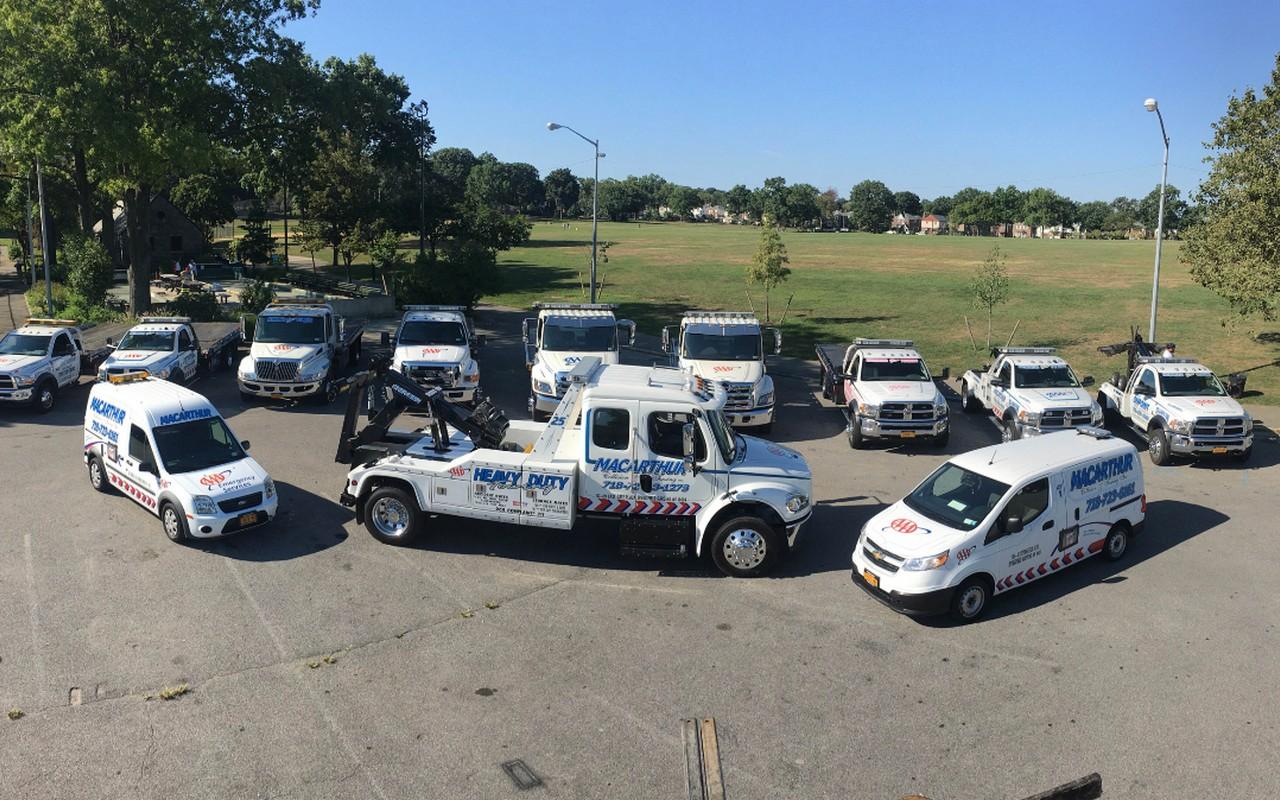
A jump start gets the car running once. If the battery will not hold a charge, it will be dead again tomorrow. Macarthur's truck tests the battery and the charging system where the car sits, and if the battery is done, installs a new one from the common sizes we carry, right there in your driveway, your office lot, or the roadside. Call 516-362-5350 with the year, make, and model.
Reviews and credentials
What Drivers Say About Macarthur's Roadside Drivers
A dead battery is the most common roadside call Macarthur gets, and the reviews on Google are about the driver who did not just jump the car and leave: he tested it, explained what he found, and when the battery was finished, put a new one in on the spot. Those reviews are below.
I got locked out my car on a cold snowy night and Alex came and unlock my car. He was very quick and professional. I would definitely use this towing company again.
Great timing and professionalism. The tow truck driver Carlos was experienced and helpful. I would recommend this company and Carlos to anyone.
Not the usual experience with a towing company. Everyone that I spoke to was polite and respectful and they towed my car with care. Hopefully I never need my car towed again, but if I do, this is who I will be using!
- 1,800+Google reviews, 5.0 average as of Oct 2026
- 24/7Our own trucks, our own drivers
- 16Certifications on the shop wall
- I-CARGold Class training recognition
- 1 ShopTow fleet and body shop, Valley Stream
- LicensedDMV # 7110205 · DCA # 1389419
Every review here came from a towing or roadside call. If a Macarthur driver has put a new battery in your car where it sat, a few words on Google tell the next driver with a dead car who to call.
The driver tests before he sells. That is the whole difference.
- Car Battery
- Battery Replacement
- Mobile Battery
- Battery Installation
- Dead Battery
- Jump Start
- Battery Test
- Roadside Assistance
- AGM Battery
- Battery Service
- New Battery
- 24 Hour Service
Why a Jump Start Is Sometimes the Wrong Fix, and How the Driver Knows Which One You Need
A jump start adds enough charge to start the engine once. If the battery is healthy and simply drained by lights left on, that is all you need. If the battery has a dead cell, is sulfated from age, or cannot hold a charge, the jump works for a day and fails again. Macarthur's driver tests the battery after the jump and tells you which situation you are in before you pay for either.
The honest version of roadside battery service is that the driver does not know which fix you need until he tests. Here is the difference and why it matters to your week.
A drained battery. Headlights left on, a door ajar overnight, a car that sat for three weeks, a short trip habit that never lets the alternator catch up. The battery is fine; it is just empty. A jump start and a long drive bring it back, and the test confirms it is holding voltage.
A failing battery. Most car batteries last a few years in Long Island's heat and cold, and when they start to go they go quickly. A jump gets the engine running, the alternator charges it, and the next cold morning it is dead again, often with no warning. The test shows low cold-cranking capacity or a cell that will not hold voltage, and the driver tells you a new battery is the real fix.
A charging problem that is not the battery. A failing alternator, a loose or corroded cable, a bad ground. A new battery in a car with a bad alternator dies again in a day. The driver tests the charging system with the engine running, and if the problem is upstream of the battery, he says so and the car goes to a mechanic rather than getting a battery it does not need.
Why we test first. Selling a battery to someone whose problem is a dome light is not a business we want. The roadside assistance page lists what the truck can diagnose at the curb and what needs a shop.
Car dead again after a jump? That is the battery. Call and we bring one.
What the Battery and Charging System Test Shows, and Why It Takes a Few Minutes
The driver puts a tester on the battery to read its resting voltage and its cranking capacity against the rating printed on the label, then starts the car and reads charging voltage from the alternator. The result says whether the battery is good, weak, or failed, and whether the charging system is doing its job. You see the numbers before anything is sold.
A battery test is not a guess with a voltmeter. Here is what the driver is actually measuring.
Resting voltage. A healthy, charged battery sits at a certain voltage with the engine off. Lower numbers mean discharged or failing. This reading alone cannot tell the two apart, which is why there is a second test.
Cranking capacity. The tester loads the battery the way a starter does and measures how it holds up against the cold-cranking rating on the label. A battery that reads full voltage at rest but collapses under load has a dead cell or heavy sulfation; it will start the car on a warm afternoon and fail on a cold morning. This is the test that catches batteries about to leave you stranded.
Charging voltage. With the engine running, the alternator should raise the voltage at the battery into a specific range. Too low and the alternator or its belt is failing. Too high and the regulator is bad and will cook a new battery. If the charging system is wrong, a new battery is the wrong fix, and the driver says so.
Cables and terminals. Green or white corrosion on the posts, a loose clamp, a frayed ground strap. These cause more no-starts than people expect, and they are cleaned and tightened as part of the install.
What you get. The driver tells you the readings in plain terms: good battery, drained; weak battery, replace soon; failed battery, replace now; or a charging problem that needs a mechanic. The breakdowns section on the towing page covers the no-start calls that turn out to be something other than the battery.
Want the test even if the car started? We check it on the spot.
The Batteries on the Truck: Common Group Sizes, AGM and Flooded Types, and What Fits Your Car
Macarthur's trucks carry batteries in the common group sizes that fit most cars, SUVs, and light trucks on the road, in both flooded and AGM types. Tell us the year, make, and model when you call and the driver brings the right size and type. For an unusual size, the driver confirms before the truck leaves rather than guessing.
Car batteries come in standardized group sizes that describe the case dimensions and the terminal positions, and the same car often accepts only one or two of them. Here is how we make sure the right one is on the truck.
Group sizes. The size is on the old battery's label and in the owner's manual, and the driver looks it up from the year, make, and model when you call. The common sizes for domestic and import sedans, SUVs, minivans, and half-ton pickups are stocked. If your car takes something less common, we tell you on the phone whether it is on the truck or needs to be picked up first.
Flooded versus AGM, in plain terms. A flooded battery is the traditional type with liquid acid inside; it is the cheaper choice and fine for most cars without stop-start or heavy electronics. An AGM battery holds the acid in glass mats, handles deep discharges and vibration better, charges faster, and is required on many newer cars with stop-start systems, large infotainment screens, and lots of sensors. Putting a flooded battery in a car designed for AGM shortens its life and can confuse the car's charging logic. The driver matches the type the manufacturer specified.
Terminal positions and hold-downs. Some cars put the positive post on the left, some on the right, and a battery with the posts reversed will not reach the cables. The hold-down bracket must clamp the new battery firmly; a loose battery vibrates itself to death. The driver checks both before he tightens anything.
Registration on newer cars. Many European cars and a growing number of others need the new battery registered to the car's computer so the charging system knows it has a fresh battery. Where the car requires it and the driver's tool supports it, that is done at the install; where it needs a dealer tool, he tells you so you can have it done.
Brands. We carry batteries from established manufacturers in the common sizes; ask the driver what is on the truck. We do not list specific brands here because stock changes.
Give us the year, make, and model and the right battery is on the truck.
How the Install Goes, From Disconnecting the Old Battery to Testing the New One Under Load
The driver disconnects the negative cable first, then the positive, removes the hold-down, lifts out the old battery, cleans the terminals and the tray, sets the new battery, fastens the hold-down, connects positive then negative, and tests the new battery and the charging system under load. The old battery goes on the truck for recycling. You drive away with a car that will start tomorrow.
A battery swap looks simple and mostly is, but the order of operations and the details are what keep sparks, blown fuses, and loose connections out of it.
Preserving settings. On cars where losing power resets radio codes, seat memory, window positions, or idle learning, the driver connects a memory saver before the old battery comes out so the car does not lose its settings. On cars where the manufacturer says to let the system reset, he follows that instead.
Negative off first. Always. Disconnecting the negative cable first removes the chance of a wrench touching ground while on the positive post. The reverse order on the way back in.
Cleaning. Corrosion on the terminals is scrubbed off, the tray is cleaned of acid residue, and a protective coating goes on the posts. A clean connection matters as much as a new battery; many no-starts are corrosion, not capacity.
Fastening. The hold-down is tightened so the battery cannot shift. The clamps are tightened enough to grip, not enough to crack the post. The driver tugs each one.
Testing after. The same tester that diagnosed the old battery checks the new one and the charging voltage with the engine running. If the alternator is not charging the new battery properly, you hear about it now, not next week.
Where we do it. Your driveway, a parking lot at work, a shopping center, the roadside, or a parking garage with enough room to open the hood. Batteries under the rear seat, in the trunk, or in a fender well take longer, and the driver knows where yours is from the make and model.
Battery in the trunk or under the seat? Tell us the car and the driver knows where it is.
Signs Your Battery Is Going Before It Strands You: Slow Cranks, Dim Lights, Dashboard Warnings, and Age
A battery that is failing usually gives warning: the engine cranks slowly on cold mornings, headlights dim at idle, electrical accessories act up, a battery or charging warning appears on the dash, or the battery is simply several years old. Any of these is a reason to have it tested before it fails in a parking lot at night.
Most dead-battery calls could have been a scheduled visit instead of a roadside emergency. Here is what to listen and look for.
Slow cranking. The starter turns the engine over slower than it used to, especially on the first cold morning of the season. This is the most reliable early sign.
Dimming at idle. Headlights that brighten when you rev the engine and dim at a stop point to a battery that is not holding up, or an alternator that is not keeping up.
Electrical oddities. Power windows that crawl, a radio that resets, a key fob the car does not recognize until the second press, warning lights that flicker on start. Low voltage confuses modern electronics before it stops the starter.
The dashboard light. A battery-shaped warning light with the engine running usually means a charging problem, not the battery itself. Do not keep driving on it; the car will run until the battery is empty and then stop wherever it is.
Age and climate. Long Island summers are hard on batteries; the heat does the damage and the first cold snap reveals it. A battery several years old that has never been tested is a battery about to be tested the hard way.
Swelling, smell, or corrosion. A bulging case, a rotten-egg smell, or heavy corrosion on the posts means the battery is failing internally. Replace it; do not jump it repeatedly.
What to do. Call and have the driver test it at your home or office on your schedule. A scheduled install in the driveway beats a jump in the rain. The seasonal section on the homepage covers winter and summer battery failures in more detail.
Cranking slow this week? Have it tested before the cold morning it fails.
Stop-Start Cars, Hybrids, Trucks, and Fleets: Battery Situations That Need the Right Part and the Right Procedure
Cars with stop-start systems need an AGM battery and often a registration step. Hybrids and EVs have a small 12-volt battery that fails like any other and strands the car even though the big battery is full. Trucks and vans may carry two batteries. Fleet vehicles can be scheduled in batches. Macarthur handles each by the manufacturer's requirements.
Not every battery install is a sedan in a driveway. These are the ones that need the right part and the right order of operations.
Stop-start systems. Cars that shut the engine off at red lights cycle the battery dozens of times a day and are built for an AGM or enhanced flooded battery. The wrong type fails early and can disable the stop-start feature. Most of these cars also need the new battery registered to the body computer, which resets the charging strategy; the driver does it where his tool supports the car.
Hybrids and electric vehicles. The high-voltage battery that drives the car is not what we replace. The small 12-volt battery that powers the computers, locks, and the relay that connects the big battery is, and when it dies the car is as dead as any gasoline car, often with a full charge showing. These 12-volt batteries are frequently AGM and live in the trunk or under the rear seat. The EV section on the flatbed page explains what happens when the 12-volt is dead and the car will not even shift.
Diesel trucks and large vans. Many run two batteries in parallel, and both should be replaced together; a new battery paired with an old one is dragged down to the old one's level. Tell us the vehicle and we bring the pair.
Fleets. Vans and pickups that sit over the weekend and short-trip all week kill batteries on a schedule. For fleet accounts we can test the whole lot on one visit and replace what is failing before it fails on a route. The commercial accounts section on the towing page explains how that is arranged.
When it is not the battery. A starter that clicks with a good battery, an engine that turns over strongly but never catches, a security system that will not release. Those are shop problems, and the same truck can tow the car to your mechanic instead of selling you a part you do not need.
Hybrid, stop-start, or a two-battery truck? Tell us and the right parts come.
What Happens to the Old Battery: It Leaves on the Truck for Recycling, Not in Your Garage
The old battery goes on the Macarthur truck and into the recycling stream, where the lead, the plastic case, and the acid are recovered. You do not have to store it, carry it anywhere, or pay a disposal fee to a shop. New York requires retailers to take back used lead-acid batteries, and we handle that part of the job automatically.
A car battery is mostly lead and sulfuric acid in a plastic case, and it is one of the most recycled products in the country because every part of it is reusable. It is also something you should not leave in a corner of the garage.
Why it matters. Lead is toxic, the acid burns, and a cracked old battery in a garage leaks both. Recycling plants recover nearly all of the lead for new batteries, neutralize the acid, and grind the case into pellets for new cases.
What we do. The driver takes the old battery, secures it upright on the truck, and it goes into the shop's recycling pickup. No fee, no trip to a drop-off site, no core to return.
If you have old batteries around. If there is a dead battery from a previous replacement sitting in your garage, tell the driver; in most cases he can take it along with the one he just removed.
The install is complete when the old battery is gone. That is the point of mobile service: the car starts, the old part is handled, and nothing is left for you to deal with. The roadside assistance page lists the other calls the truck handles the same way.
Old battery in the garage from last time? The driver can take that one too.
How Mobile Battery Installation Is Priced: the Battery, the Service Call, and What You Do Not Pay
A mobile battery install is priced as the battery itself plus a service call based on where the car is and the time of day. You are not paying for a tow, a shop visit, or a disposal fee. If the test shows the battery is fine or the problem is the charging system, you are told before any battery is sold. Macarthur quotes the service on the phone from the year, make, and model.
Here is what the number is made of so there are no surprises when the driver hands you the slip.
The battery. Priced by group size and type. An AGM costs more than a flooded battery of the same size, and the driver tells you which your car requires and why.
The service call. Where the car is and when you call. A scheduled install in your driveway on a weekday afternoon and an emergency call in a parking lot at midnight are not the same, and the person who answers tells you the difference.
What is not on the bill. A tow, because the car never leaves. A disposal fee, because the old battery goes with the driver. A battery you did not need, because the test comes first.
If the battery is not the problem. The driver tells you what the test showed and what the next step is. If that step is a tow to a mechanic for an alternator or a starter, it is quoted as a tow and you decide. The cost section on the towing page goes through how that is priced.
Payment. Settled with the driver or the office; ask when you call about how you would like to pay.
Give us the car and the location and the number comes before the truck.
Mobile Battery Installation Across Nassau County and the Queens Line, From the Yard in Valley Stream
Macarthur's trucks leave from 170 East Lincoln Avenue in Valley Stream with batteries on board and reach every town in Nassau County, the Queens neighborhoods along the county line, and the Suffolk towns just across it, 24 hours a day. Every town has its own battery installation page.
The yard is on the Nassau–Queens line, so the south shore and southeastern Queens are closest: Valley Stream, Lynbrook, Elmont, Franklin Square, Hempstead, Malverne, Rockville Centre, Oceanside, Baldwin, Freeport, Long Beach, and the Five Towns around Cedarhurst, Woodmere, and Hewlett. Across the line, Laurelton, Rosedale, Springfield Gardens, Cambria Heights, St. Albans, Queens Village, Jamaica, and Far Rockaway.
The same trucks cover central Nassau, Garden City, Mineola, New Hyde Park, Westbury, East Meadow, Levittown, Hicksville, Plainview, Bellmore, Wantagh, and Massapequa, the north shore from Great Neck and Port Washington to Glen Cove and Jericho, and the Suffolk border towns of Amityville, Melville, and Huntington. Every town on the locations page has a battery page. If yours is not listed, call anyway.
Find your town and its battery installation page.
More Towing Services From the Same Fleet
Towing
24/7 towing for cars, trucks, and everything in between.
Light Duty Towing
Cars, SUVs, vans, and pickups on flatbeds and wheel-lifts.
Heavy Duty Towing
Trucks, buses, semis, and tractor trailers, safely and securely.
Flatbed Towing
All four wheels off the ground for AWD, EV, and low vehicles.
Motorcycle Towing
Special care for your two-wheeled pride and joy.
Long Distance Towing
Convenient and economical long distance towing for any vehicle.
One number covers every truck in the fleet.
Questions Drivers Ask About Mobile Battery Installation
- Can you replace my car battery where the car is?
- Yes. The truck brings a new battery to your driveway, office lot, or the roadside, tests the old one and the charging system, installs the new one, and takes the old one for recycling.
- Do you test before you sell me a battery?
- Always. The driver tests resting voltage, cranking capacity under load, and charging voltage with the engine running. If the battery is fine or the problem is the alternator, you are told before anything is sold.
- Do you carry a battery for my car?
- We stock the common group sizes for most cars, SUVs, minivans, and light trucks in flooded and AGM types. Give us the year, make, and model when you call and the driver confirms the right one is on the truck.
- What is the difference between an AGM and a regular battery?
- A regular flooded battery has liquid acid inside and suits most older cars. An AGM holds the acid in glass mats, handles deep discharge and vibration better, and is required on many newer cars with stop-start and heavy electronics. The driver matches what the manufacturer specified.
- My car has stop-start. Does the new battery need to be registered?
- On many of those cars, yes. Registration tells the charging system it has a fresh battery. The driver does it where his tool supports the car and tells you if it needs a dealer tool.
- Will I lose my radio settings and seat memory?
- The driver connects a memory saver before disconnecting the old battery on cars where losing power resets settings, unless the manufacturer specifies a full reset.
- My hybrid shows a full charge but will not start. Is that the battery?
- Usually the small 12-volt battery, which powers the computers and the relay to the main battery. It fails like any other and is replaced the same way, often in the trunk or under the rear seat.
- My truck has two batteries. Do both need replacing?
- Usually, yes. A new battery paired with an old one is pulled down to the old one's level. Tell us the vehicle and we bring the pair.
- What happens to the old battery?
- It leaves on the truck and goes into the recycling stream. No fee and nothing for you to store or carry.
- Can you just jump the car instead?
- Yes, if the test shows the battery is healthy and only drained. If it will not hold a charge, a jump works for a day and the car is dead again; the driver tells you which it is.
- What if it is the alternator, not the battery?
- The charging test shows that. A new battery in a car with a bad alternator dies in a day, so instead the car is towed to the mechanic you choose and quoted as a tow.
- Can you replace a battery in a parking garage?
- Yes, as long as there is room to open the hood or reach the battery location. Tell us the garage so the right truck comes.
- Do you do battery installs at night and on weekends?
- Yes. Roadside service runs 24 hours a day, 7 days a week. Scheduled daytime installs in your driveway are also welcome.
- How is it priced?
- The battery by size and type, plus a service call based on location and time of day. No tow, no disposal fee, and no battery you did not need.
Did not see your question? The person who answers can.
Call Macarthur for a Battery Installed Where Your Car Sits
Our own trucks, batteries on board, 24 hours a day. Tell us the year, make, and model and where the car is.
Call 516-362-5350