
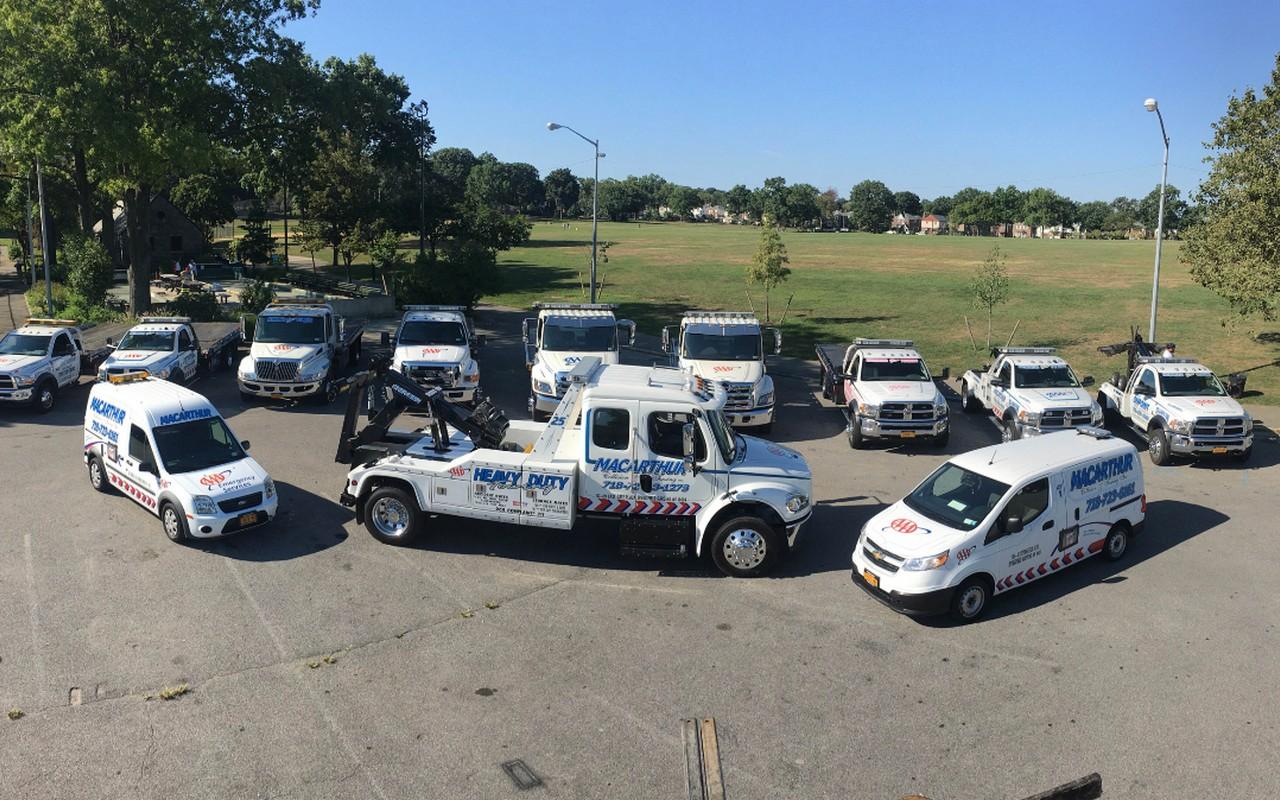
Jump Starts
Dead Battery? We Jump It, Test It, and Replace It on the Spot
A dead battery is the most common call Macarthur gets. A truck comes to your driveway, your office lot, or the curb, jumps the car, and then tests the battery and the charging system so you know whether the jump will hold. If the battery is done, a new one is installed right there from the stock on the truck. 24 hours a day across Nassau County and the Queens line. Call 516-362-5350.
Reviews and credentials
What Drivers Say About Macarthur's Jump Start Calls
A jump start is a small job that matters a lot at seven in the morning, and the reviews drivers leave on Google are about the driver who did it: quick, honest about whether the battery was finished, and gone once the car was running. Those reviews are below, in the customers' own words.
I got locked out my car on a cold snowy night and Alex came and unlock my car. He was very quick and professional. I would definitely use this towing company again.
Great timing and professionalism. The tow truck driver Carlos was experienced and helpful. I would recommend this company and Carlos to anyone.
Not the usual experience with a towing company. Everyone that I spoke to was polite and respectful and they towed my car with care. Hopefully I never need my car towed again, but if I do, this is who I will be using!
- 1,800+Google reviews, 5.0 average as of Oct 2026
- 24/7Our own trucks, our own drivers
- 16Certifications on the shop wall
- I-CARGold Class training recognition
- 1 ShopTow fleet and body shop, Valley Stream
- LicensedDMV # 7110205 · DCA # 1389419
Every review here came from a towing or roadside call. If a Macarthur driver got your car started, a few words on Google tell the next driver with a dead battery who to call.
The truck that jumps it can replace it, or tow it.
- Jump Start
- Jump Starts
- Dead Battery
- Battery Jump
- Car Battery
- Battery Service
- Battery Replacement
- Boost Service
- Roadside Assistance
- 24 Hour Service
- Tow Truck
- Towing
What Happens on a Macarthur Jump Start Call, From the Clamps to the Test
The driver connects a professional jump pack to the battery or the car's jump terminals, starts the car, and then tests the battery's resting voltage and the charging voltage with the engine running. That tells him whether the battery will hold a charge and whether the alternator is doing its job. You leave knowing whether the car will start again tomorrow, not just whether it started today.
A jump start is not just clamps and go. Anyone can get a car running for thirty seconds. The useful part of the call is the two minutes afterward, when the driver puts a tester on the battery and tells you what is actually wrong.
Here is the sequence. The driver confirms the symptom, a click, a slow crank, or nothing at all, and looks for the obvious: corroded terminals, a loose clamp, a battery that is swollen or leaking. He connects the jump pack, positive first, then negative to a ground point rather than the battery's negative post on most cars, and starts the engine. With it running, he reads the charging voltage; a healthy alternator pushes well above the battery's resting number. Then he shuts it off and reads the battery alone, or runs a load test that shows whether the battery can still deliver current under demand. The result is one of three answers, and the next sections cover each: the battery is fine and something drained it, the battery is finished and needs replacing, or the battery is fine and the charging system is not.
Clicking, slow crank, or nothing? Say which and the truck comes.
Why the Battery Died: Lights Left On, Cold Weather, Short Trips, Age, or a Bad Alternator
Batteries die for five common reasons: something was left on and drained it, cold weather cut its output, a pattern of short trips never let it recharge, it simply reached the end of its life, or the alternator stopped charging it. The driver's test sorts out which, because the fix is different for each.
Knowing why the battery died tells you whether a jump is the end of the problem or the beginning. Here is how each cause shows up.
Something was left on
Dome light, headlights, a phone charger, a dash camera, a door not fully shut. The battery is fine; it was drained. After the jump, a drive recharges it and the test confirms it holds. This is the best outcome, and it is common.
Cold weather
Cold slows the chemical reaction inside a battery and thickens the engine oil, so a battery that was marginal in October fails on the first freezing morning in January. The jump gets it going; the test tells you whether it is worth trusting through the winter. The winter section on the homepage covers why the cold morning calls cluster.
Short trips
Starting an engine takes a lot out of a battery, and a ten-minute drive does not put it back. A car used only for short errands slowly runs the battery down over weeks. A long drive or a charger at home fixes it if the battery is otherwise healthy.
Age
Most batteries last several years, and the end comes faster in heat than in cold. A battery that reads low after a jump and a drive, or fails a load test, is finished. The driver says so, and the next section covers replacing it on the spot.
The alternator
If the charging voltage is low with the engine running, the alternator or its belt is the problem, and a new battery will die the same way. That is a shop repair. The driver tells you, and the same truck can tow the car to your mechanic.
The test tells you which one it was. No guessing.
When the Jump Will Not Hold: a New Battery Installed Where the Car Sits
If the test shows the battery will not hold a charge, the driver can replace it on the spot. Common battery sizes ride on the truck. He disconnects the old battery, cleans the terminals, installs the new one, confirms the car starts and charges, and takes the old battery for recycling. You do not drive to a parts store on a battery that might quit at the next light.
A jump that does not hold is a jump that strands you again, usually somewhere worse. That is why the truck carries batteries. Tell the person who answers the year, make, and model when you call and the right size is on the truck when it arrives; if your car takes an unusual size, we tell you on the phone.
The installation is the same job a shop does, done in your driveway or the parking lot: terminals cleaned, the hold-down bracket reinstalled so the battery cannot shift, the new battery tested under load, and the charging voltage confirmed. On cars that need the battery registered to the car's computer, the driver tells you so your mechanic or dealer can do that step. The mobile battery installation page covers the sizes carried, cars with batteries in the trunk or under the seat, and what to tell us.
Battery finished? Tell us the year, make, and model and the new one rides on the truck.
When It Is Not the Battery: Starters, Alternators, Corroded Cables, and What Happens Next
A car that will not start with a healthy battery has a different problem: a starter that clicks but does not turn, an alternator that is not charging, a corroded or loose cable, or a security system that will not let the engine fire. The driver's test points to which, and because every roadside truck is a tow truck, the car goes to your mechanic or our shop from the same visit.
Sometimes the honest answer to a jump start call is that a jump will not fix it. Here is what the driver looks for and what happens next.
A single loud click with good voltage usually means the starter. The jump pack cannot help; the car needs a starter, and that is a shop repair. A slow crank that improves with the jump points to the battery or a weak connection. Good battery, low charging voltage points to the alternator or its belt; the car will run on the jump for a while and then die again. Green or white crust on the terminals can stop a good battery from delivering current; the driver cleans it and retests, and sometimes that is the whole fix. A security light flashing with the engine refusing to fire is an immobilizer problem, not a battery problem.
In each case the driver tells you what he found and where the car can go. Your regular mechanic, a dealership for an immobilizer issue, or our own shop in Valley Stream if there is body damage involved. The tow is quoted before the car is loaded, and you are not billed for a separate second truck. The breakdown towing section on the towing page covers no-start causes in more depth.
Not the battery? The driver says so, and the same truck tows it.
Jump Starting Electric Vehicles and Hybrids: the 12-Volt Battery Nobody Thinks About
Every electric vehicle and hybrid has a small 12-volt battery that runs the locks, the screen, and the computers. When it dies, the car will not wake up, shift, or sometimes unlock, even with a full main battery. The driver revives it at the manufacturer's jump point, which is often behind a cover in the front of the car. The high-voltage main battery is never jumped; a depleted one means a flatbed to a charger.
EV owners are often surprised to learn their car has a conventional 12-volt battery at all. It does, and it fails like any other, usually with no warning: the car is dead on the screen, the door handles may not present, and nothing responds.
The driver finds the jump terminals, which on many EVs are under a cover in the frunk or behind a tow-eye panel in the bumper, connects the jump pack, and the car wakes up. From there it can be put in tow mode, driven, or charged. If the 12-volt battery is finished rather than drained, it can be replaced like any other, though some EVs use a specific type the dealer stocks. If the main battery is what ran down, no jump helps; the car rides the flatbed to the nearest working charger or your home outlet. The EV and hybrid section on the homepage lists how common brands handle this.
EV dead on the screen? Tell us the make and the driver brings the jump pack.
Jumping It Yourself Versus Calling: What Can Go Wrong With Cables and a Stranger's Car
You can jump a car yourself with cables and a second car, but modern vehicles are easy to damage that way: reversed clamps, a spark near the battery, or a voltage spike from the donor car can take out fuses, modules, or the alternator. A professional jump pack delivers controlled current with no second vehicle. If you do it yourself, connect positive to positive, negative to a ground point on the dead car, and remove the clamps in reverse order.
There is nothing wrong with jumping your own car if you know the sequence and the cars are simple. The risk has grown as cars have gotten more electronic, and the cost of a mistake has grown with it.
The usual mistakes: clamps reversed, which can blow main fuses or damage modules on both cars; the negative clamp on the dead battery's post instead of a ground, which puts a spark next to a battery that may be venting hydrogen; a donor car revved hard, which can push a spike into the dead car's electronics; and cables too thin to carry the current, which just do not work and make you think the battery is worse than it is. A jump pack avoids all of it, and the test afterward is the part the cables cannot do. If the car is in a spot where a second car cannot reach, in a garage, nose-in against a wall, or on a road with traffic, calling is the safer answer. The safety section on the towing page covers where to stand while you wait.
Not sure about the cables? The truck brings a jump pack and a tester.
What to Tell Us When You Call for a Jump Start, and What to Have Ready
Tell us where the car is, the year, make, and model, and what it does when you turn the key: a click, a slow crank, dashboard lights but nothing else, or nothing at all. If the car is in a garage, say so. If you know the battery is old, say so, and the right replacement rides on the truck. Have the keys and the hood release within reach.
The symptom tells the driver what to bring. A click points to the battery or starter; a slow crank to the battery; dead silence with no lights to the battery or a cable; lights and a flashing security lamp to something a jump will not fix. Year, make, and model tells him which battery size to carry and where the jump terminals are on cars with the battery in the trunk or under a seat.
While you wait, pop the hood if you can, or know where the release is. Turn off everything you can: lights, radio, climate, chargers. If the car is in a driveway, make sure the truck can get close enough; a jump pack has short leads. If it is in a garage, the driver can carry the pack in. If it is on a road with traffic, get out on the side away from traffic and stand well back. The call section on the towing page covers location details that help the driver find you.
Say what the car does when you turn the key. That is most of the diagnosis.
What a Jump Start Costs, and Why It Is the Cheapest Call We Make
A jump start is priced on the distance the truck travels and the time of day. If a new battery is installed, the battery is priced with the installation. If the car cannot be fixed at the curb and is towed, the tow is quoted before the car is loaded. A jump that works is the smallest bill a Macarthur truck writes.
We send a truck for a jump because it is the cheapest outcome for you, cheaper than a tow and cheaper than a shop visit to be told the battery was dead. The driver tries the jump first whenever the symptom suggests it might work.
What moves the number: how far the truck comes, the hour, and whether a battery is installed. A new battery is priced as the part plus the installation, and the driver tells you the number before he installs it. If the jump reveals a starter or alternator problem and the car is towed, the tow is priced on distance, vehicle, and destination; the towing cost section explains those factors. Give the person who answers your location and the symptom and you have the number before the truck rolls.
Location and symptom get you the number before the truck leaves.
Jump Starts Across Nassau County and the Queens Line, From Valley Stream
Macarthur's trucks leave from 170 East Lincoln Avenue in Valley Stream and reach every town in Nassau County, the Queens neighborhoods along the county line, and the Suffolk towns just across it, 24 hours a day. Every town has its own jump start page.
From the yard on the Nassau–Queens line, the trucks are closest to the south shore and southeastern Queens: Valley Stream, Lynbrook, Elmont, Franklin Square, West Hempstead, Hempstead, Malverne, Rockville Centre, Oceanside, Baldwin, Freeport, Long Beach, Cedarhurst, Woodmere, Hewlett, and Inwood, and across the line in Laurelton, Rosedale, Springfield Gardens, Cambria Heights, St. Albans, Hollis, Jamaica, and Far Rockaway.
The same trucks cover central and eastern Nassau, Garden City, Mineola, Carle Place, Westbury, Uniondale, East Meadow, Levittown, Hicksville, Plainview, Bellmore, Seaford, and Massapequa, the north shore from Great Neck and Port Washington to Roslyn and Jericho, and the Suffolk border towns of Amityville, East Farmingdale, and Huntington. Every town on the locations page has a jump start page. If yours is not listed, call anyway.
Find your town and its jump start page.
More Towing Services From the Same Fleet
Towing
24/7 towing for cars, trucks, and everything in between.
Light Duty Towing
Cars, SUVs, vans, and pickups on flatbeds and wheel-lifts.
Heavy Duty Towing
Trucks, buses, semis, and tractor trailers, safely and securely.
Flatbed Towing
All four wheels off the ground for AWD, EV, and low vehicles.
Motorcycle Towing
Special care for your two-wheeled pride and joy.
Long Distance Towing
Convenient and economical long distance towing for any vehicle.
One number covers every truck in the fleet.
Questions Drivers Ask About Jump Starts
- Can you jump start my car?
- Yes. A Macarthur truck comes to the car, jumps it with a professional jump pack, and tests the battery and charging system so you know whether it will start again tomorrow.
- Do you test the battery after the jump?
- Yes. The driver reads the battery's resting voltage and the charging voltage with the engine running, and can load test the battery. That tells you whether the battery or the alternator is the problem.
- What if the battery will not hold a charge?
- The driver can install a new battery on the spot from the stock on the truck. Tell us the year, make, and model when you call so the right size is on board.
- What if it is the starter or alternator and not the battery?
- The driver tells you what the test shows. A starter or alternator is a shop repair, and the same truck tows the car to your mechanic or to our shop, quoted before it is loaded.
- Can you jump an electric car or a hybrid?
- Yes, the 12-volt battery that runs the electronics. The driver uses the manufacturer's jump point to wake the car. The high-voltage main battery is never jumped; if it is depleted, the car rides a flatbed to a charger.
- The car clicks once and does nothing. Is that the battery?
- Often it is the starter, especially if the lights are bright. The driver's test sorts it out. If it is the starter, the car is towed rather than jumped.
- Why does my battery keep dying?
- Common causes are something left on, cold weather, a pattern of short trips, an old battery, or an alternator that is not charging. The test after the jump points to which.
- Is it safe to jump a car with cables and another car?
- It can be, if the clamps are connected in the right order and the negative goes to a ground point rather than the battery post. Modern electronics are easy to damage with a reversed clamp or a voltage spike, which is why the truck uses a jump pack.
- My battery is in the trunk or under the seat. Can you still jump it?
- Yes. Most of those cars have jump terminals under the hood, and the driver knows where they are on common models. Tell us the year, make, and model.
- Can you jump my car inside a parking garage?
- Yes. The jump pack is portable and the driver carries it in. Tell us the garage and the level.
- Do you jump start trucks and vans?
- Yes, including diesel pickups and work vans with dual batteries. Tell us the vehicle so the right pack comes.
- Do you jump start cars at night?
- Yes. Roadside assistance runs 24 hours a day, every day. Call 516-362-5350.
- What should I do while I wait?
- Turn off lights, radio, and chargers, know where the hood release is, and if you are on a road with traffic, stand well off the shoulder away from traffic. Keep your phone on so the driver can reach you.
- How much is a jump start?
- It depends on how far the truck travels and the time of day; a new battery is priced with its installation. We give you the number on the phone before the truck leaves.
Did not see your question? The person who answers can.
Call Macarthur for a Jump Start Anywhere in Nassau County
Jumped, tested, and replaced if it needs to be, where the car sits. 24 hours a day.
Call 516-362-5350